
Face-Frame Construction Method
Face-Frame Construction Method
Face-frame construction is a traditional method of building cabinets, commonly found in American cabinetry. It involves creating a wooden frame around the front of the cabinet box. Here’s an in-depth explanation:
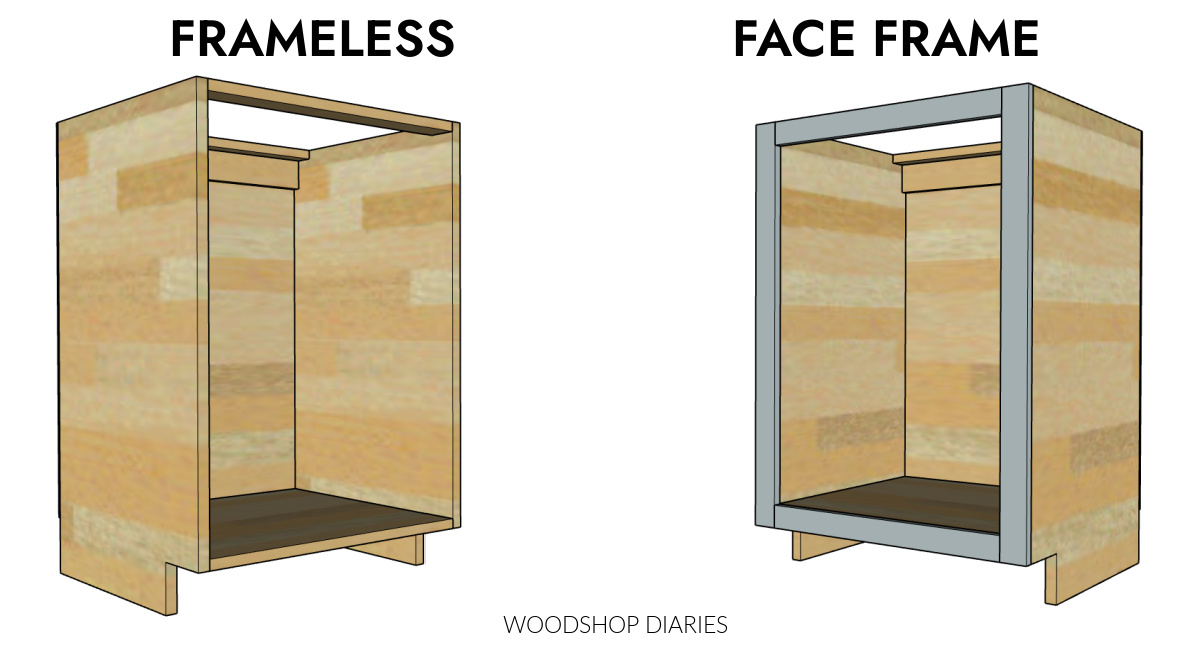
Characteristics:
-
-
Wooden Frame: In face-frame construction, a wooden frame is attached to the front edges of the cabinet box. This frame is typically made from hardwood, such as oak or maple.
-
Overlay or Inset: The frame can have a partial overlay, full overlay, or inset design, depending on the desired look and functionality of the cabinets.
-
Hinge Attachment: Hinges for doors are directly attached to the wooden frame, providing stability and support.
Advantages:
-
Traditional Aesthetic: Face-frame construction offers a classic and traditional appearance, making it suitable for various design styles, including farmhouse and colonial.
-
Strength and Durability: The wooden frame adds structural support to the cabinet, enhancing its strength and durability.
-
Hinge Attachment: Hinges are secured directly to the frame, which can make door adjustments and replacements more straightforward.
Considerations:
-
Reduced Interior Space: The frame takes up some space within the cabinet, potentially reducing the overall interior storage capacity.
-
Visible Hardware: Because of the frame, hinges and hardware may be partially visible when the cabinet doors are closed.
-
Maintenance: Face-frame cabinets may require more maintenance over time due to potential wear and tear on the visible frame.
Suggested Use:
-
Traditional and Classic Styles: Face-frame cabinets are often chosen for kitchens and bathrooms in homes with traditional or classic design aesthetics.
-
Customization: Clients who prefer custom-made cabinets may opt for face-frame construction to achieve specific design elements.
-