
Well
Well
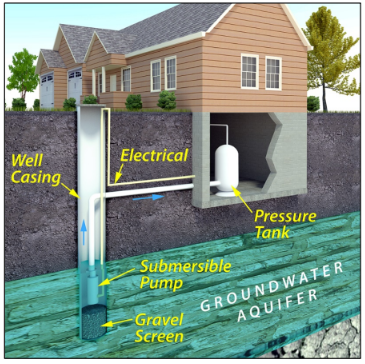
Where You Will Find Residential Wells:
-
Rural and Suburban Areas: Residential wells are most commonly found in rural and suburban areas, where municipal water supply systems may not be available or practical due to lower population densities. In these areas, homeowners often rely on well water as their primary source of freshwater.
Why Residential Wells Are Used:
-
Absence of City Water: In rural and remote areas, city water supply systems may not extend to every property. In such cases, residential wells offer an independent and reliable source of freshwater, allowing homeowners to meet their daily water needs.
-
Self-Sufficiency: Homeowners who value self-sufficiency and independence from municipal utilities may choose properties with residential wells. These wells provide an autonomous water source that is not subject to water restrictions or supply interruptions.
-
Cost-Efficiency: In some cases, drilling a well and maintaining it can be more cost-effective in the long run compared to paying monthly water bills to a city or utility company. Homeowners can benefit from reduced water expenses.
Comparison to City Water:
-
Quality Control: Residential well owners have direct control over their water source and can monitor water quality closely. However, they are responsible for ensuring their well water meets safety standards through testing and potential treatment. In contrast, city water is treated at centralized facilities to meet regulatory standards.
-
Cost: Well water comes with initial drilling and maintenance costs but typically does not involve monthly water bills. City water users pay regular utility fees for water supply and treatment.
-
Reliability: City water systems generally provide a reliable and consistent supply of treated water. In contrast, the reliability of well water depends on well maintenance, groundwater levels, and potential well issues.
-
Environmental Impact: Well water is often considered more environmentally friendly as it does not rely on extensive water treatment and distribution infrastructure. However, well construction and maintenance must adhere to environmental guidelines to prevent contamination.
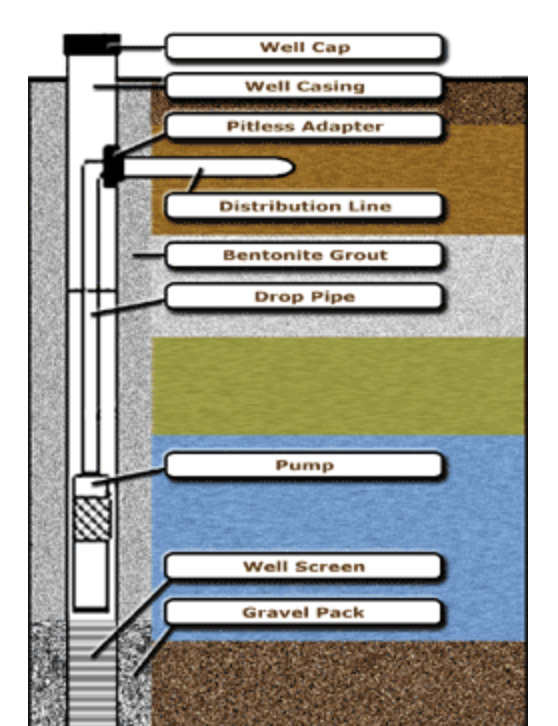
Components of a Well: Wells consist of several key components, each serving a specific function:
-
Casing: The casing is a pipe or tube that lines the well from the surface to the water source below. It prevents contaminants from entering the well and collapsing of the well walls. Common casing materials include steel, PVC (polyvinyl chloride), or concrete.
-
Screen or Gravel Pack: In some wells, particularly those accessing groundwater from gravel or sand aquifers, a screen or gravel pack is installed around the casing. This prevents sand or fine particles from entering the well while allowing water to flow in.
-
Wellhead: The wellhead is the topmost part of the well and includes a cap or cover to prevent surface contaminants from entering the well. It also houses various components like the well pump, pitless adapter (for connecting to plumbing), and a vent or air relief valve.
-
Pump: The pump is responsible for lifting water from the aquifer to the surface. There are various types of well pumps, including submersible pumps that are placed directly in the well, and jet pumps that are located above ground and use suction to draw water up.
-
Drop Pipe: In wells with submersible pumps, a drop pipe is used to connect the pump to the wellhead. This pipe allows the pump to be suspended at the desired depth in the well.
-
Well Cavity or Borehole: The well cavity or borehole is the actual underground excavation that extends into the aquifer. Its depth varies depending on the well’s purpose and the depth of the water source.
Types of Wells: There are several types of wells, each designed for specific applications and groundwater sources:

-
Dug Wells: Dug wells are typically shallow and excavated by hand or machine. They are often lined with stones, bricks, or concrete rings and are used in areas with relatively high water tables.
-
Driven Wells: Driven wells are created by driving a small-diameter pipe or casing into the ground using a driving point or well driver. They are commonly used for domestic water supply.
-
Drilled Wells: Drilled wells are created using drilling equipment, which can bore deeper into the earth to reach deeper aquifers. They are often used for larger water supply needs and irrigation.
-
Artesian Wells: Artesian wells tap into confined aquifers under pressure. When a well is drilled into an artesian aquifer, water may flow naturally to the surface without the need for a pump.
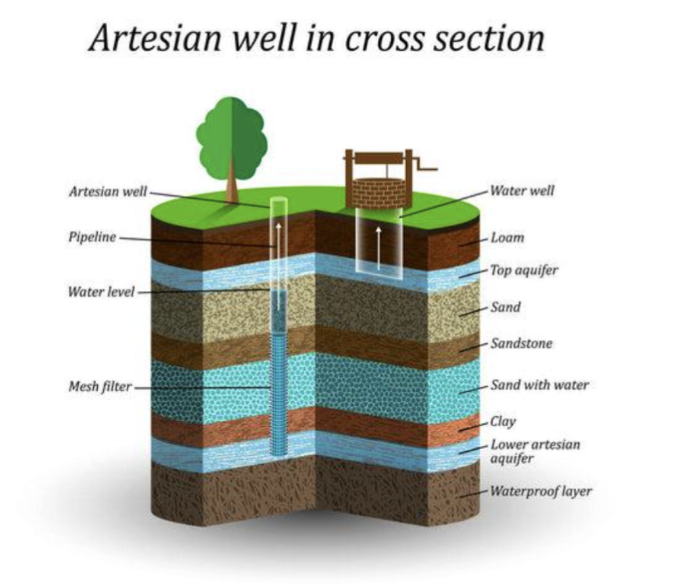
How Wells Work: Wells operate on the principle of groundwater extraction. When a well is drilled or excavated, it penetrates the ground until it reaches an aquifer or water-bearing layer. Aquifers are underground formations of rock or sediment that contain water. When a well pump is activated, it creates a vacuum or suction that draws water from the aquifer into the well.
Benefits of Wells: Wells offer several advantages:
-
Access to Clean Water: Wells can provide a consistent source of clean and natural groundwater, often with fewer treatment requirements compared to surface water sources.
-
Reliability: Wells are relatively dependable sources of water, even during droughts or when surface water sources are compromised.
-
Self-Sufficiency: Well owners have control over their water supply and are not reliant on external water utilities. This can be valuable during emergencies.
Challenges of Wells: Despite their benefits, wells also present challenges:
-
Maintenance Requirements:
-
Regular Inspections: Wells require routine inspections to ensure they remain in good condition. This includes checking for signs of well casing corrosion, leaks, or structural issues that may compromise the well’s integrity.
-
Pump Maintenance: The well pump is a critical component that requires periodic maintenance to ensure it functions efficiently. Neglected pumps can lead to reduced water pressure or even pump failure.
-
Water Testing: Homeowners with wells should regularly test their well water for quality and safety. Testing may include checking for common contaminants such as bacteria, nitrates, and minerals like iron and manganese.
Water Quality Concerns:
-
Arsenic Contamination: In some regions, arsenic contamination is a prevalent issue in well water. Arsenic is a naturally occurring element that can pose serious health risks if present in high concentrations. It is tasteless and odorless, making it difficult to detect without proper testing.
-
Microbial Contamination: Wells can also be susceptible to microbial contamination, especially if they are not adequately sealed or protected. Bacteria, viruses, and other microorganisms can enter the well, leading to waterborne illnesses.
-
Mineral Content: The mineral content of well water can vary significantly based on geological conditions. High levels of minerals like calcium, magnesium, or iron can affect water taste and cause scaling in plumbing fixtures.
Initial Cost Considerations:
-
Drilling Costs: The cost of drilling a well can vary depending on factors such as well depth, location, and geological conditions. Deep wells or areas with challenging geology may incur higher drilling expenses.
-
Water Treatment Equipment: In regions with specific water quality issues, homeowners may need to invest in water treatment equipment. For example, arsenic removal systems or water softeners can be necessary to address well water problems.
Environmental Responsibility:
-
Groundwater Protection: Homeowners with wells should be aware of the importance of responsible well construction and maintenance to prevent groundwater contamination. Contaminants from fertilizers, pesticides, or septic systems can infiltrate groundwater if wells are not properly managed.
-
In conclusion, wells are essential structures for accessing groundwater and providing a reliable source of clean water. Their design and components may vary, but their fundamental purpose remains consistent: to deliver freshwater for various domestic, agricultural, industrial, and municipal needs. Proper maintenance and water testing are crucial for ensuring the longevity and quality of well water sources.