
Window Style
Single Hung Windows
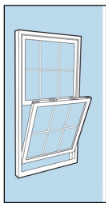
Single Hung Window Definition:
-
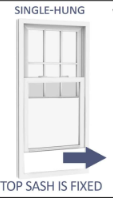
Single hung windows are a common type of vertical sliding window that consists of two sashes (moveable panels) within a single frame. These windows have a fixed upper sash and a movable lower sash.
-
The lower sash can be raised to allow for ventilation, while the upper sash remains fixed in place. This design differentiates single hung windows from double hung windows, where both sashes are operable.
Construction:
-
Single hung windows are typically constructed with a frame made from various materials, including wood, vinyl, aluminum, or fiberglass. The choice of frame material can impact the window’s appearance, energy efficiency, and maintenance requirements.
-
The sashes of single hung windows are also made from the same frame material, and they contain glass panes. The glass used can vary in terms of energy efficiency, sound insulation, and security features, depending on the homeowner’s preferences and budget.
Advantages:
Cost-Effective:
-
Single hung windows are often more cost-effective than their double hung counterparts and other window styles. This affordability can be appealing for homeowners on a budget or those looking to replace multiple windows within their home.
Classic Appearance:
-
Single hung windows have a classic and timeless appearance that complements a variety of architectural styles. Their simplicity and clean lines make them a versatile choice for both traditional and contemporary homes.
Energy Efficiency:
-
When properly installed and equipped with energy-efficient glass options, single hung windows can provide good insulation and contribute to energy savings. The fixed upper sash helps reduce air infiltration.
Space-Saving:
-
Single hung windows are space-saving, making them ideal for rooms with limited wall space or where exterior features, such as walkways or landscaping, may obstruct the window’s operation.
Considerations:
Ventilation Limitation:
-
The primary limitation of single hung windows is their ventilation capacity. Only the lower sash is operable, which means that airflow can be restricted compared to double hung or casement windows that allow for full opening. This may be a consideration for rooms requiring ample ventilation, such as kitchens or bathrooms.
Cleaning Accessibility:
-
Cleaning the exterior of the upper sash in single hung windows can be challenging, as it is not easily accessible from the inside. Homeowners may need to use ladders or other means to clean the exterior glass effectively.
Security:
-
Single hung windows, like most vertical sliding windows, may have security considerations. While they typically come with locks, the design of the lower sash may be more vulnerable to break-ins compared to windows with a more secure locking mechanism.
Aesthetic Consistency:
-
Some homeowners prefer the aesthetic consistency of double hung windows, where both sashes can be moved and adjusted. Single hung windows may have a fixed upper sash, which can affect the symmetry of the window and may not align with certain design preferences.
Double Hung Windows
-
Casement Double Hung Window Definition:
-
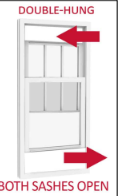
Double hung windows are a type of vertical sliding window consisting of two sashes (movable panels) within a single frame. What sets double hung windows apart from single hung windows is that both the upper and lower sashes are operable, meaning they can be moved up and down independently.
-
This design allows for more flexible ventilation options and ease of cleaning compared to single hung windows.
Construction:
-
Double hung windows are constructed with a frame typically made from materials like wood, vinyl, aluminum, or fiberglass. The choice of frame material can impact the window’s appearance, energy efficiency, and maintenance requirements.
-
The sashes of double hung windows are also made from the same frame material and contain glass panes. Homeowners can select various glass options to suit their preferences for energy efficiency, sound insulation, and security.
Advantages:
Versatile Ventilation:
-
One of the primary advantages of double hung windows is their versatility in providing ventilation. Both the upper and lower sashes can be adjusted to control the amount of airflow, allowing for more effective and customizable ventilation compared to single hung windows.
Ease of Cleaning:
-
Double hung windows offer greater convenience for cleaning. Since both sashes can be moved, it’s easier to access and clean both the interior and exterior surfaces of the window from inside the home. This feature is especially beneficial for upper-story windows.
Classic Aesthetics:
-
Double hung windows have a timeless and classic appearance that complements various architectural styles. Their balanced design and symmetrical appearance make them suitable for both traditional and contemporary homes.
Energy Efficiency:
-
When properly installed and equipped with energy-efficient glass options, double hung windows can provide good insulation and contribute to energy savings. The ability to seal both sashes tightly when closed helps reduce air infiltration.
Considerations:
Initial Cost:
-
Double hung windows are generally more expensive upfront compared to single hung windows. The additional cost is due to the complexity of their design, with both sashes being operable.
Maintenance:
-
While double hung windows are easier to clean than single hung windows, they may require occasional maintenance to ensure smooth operation. Over time, debris or dirt can accumulate in the window tracks, affecting the ease of opening and closing the sashes.
Security:
-
Security considerations may arise with double hung windows, especially if they are located on lower levels. Proper locking mechanisms should be in place to enhance security and deter break-ins.
Architectural Compatibility:
-
Some architectural styles may favor the appearance of single hung windows, where only the lower sash is operable, for aesthetic consistency. Homeowners should consider their home’s architectural style when choosing window types.
In summary, double hung windows offer versatility, ease of cleaning, classic aesthetics, and energy efficiency. While they tend to be more expensive upfront and may require occasional maintenance, their benefits in terms of ventilation and convenience make them a popular choice for homeowners seeking both functionality and timeless design in their windows.
-
Casement Windows
Casement Window Definition:
-
-
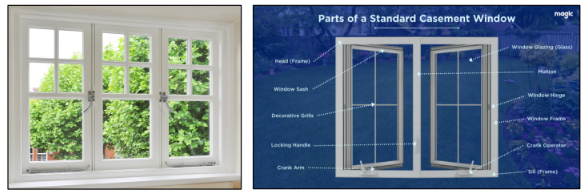
Casement windows are a type of hinged window that operates on a vertical or horizontal axis. They are attached to the window frame by one or more hinges on the side and swing open and shut like a door, using a crank or lever mechanism.
-
This design allows for maximum ventilation and unobstructed views when the window is fully open. Casement windows are known for their versatility and contemporary appearance.
Construction:
-
Casement windows are constructed with a frame made from various materials, including wood, vinyl, aluminum, or fiberglass. The choice of frame material can influence the window’s aesthetics, energy efficiency, and maintenance requirements.
-
The sash of a casement window is also made from the same frame material and contains one or more glass panes. Homeowners can select different types of glass to meet their preferences for energy efficiency, sound insulation, and security.
Advantages:
Excellent Ventilation:
-
Casement windows provide exceptional ventilation. When fully opened, they create a direct and unobstructed path for fresh air to enter the room. This makes them particularly effective for areas requiring ample airflow, such as kitchens and bathrooms.
Unobstructed Views:
-
Casement windows offer unobstructed views of the outdoors when open, as there is no central dividing rail or grille. This design maximizes natural light and outdoor visibility, enhancing the aesthetics of a room.
Tight Seal:
-
When closed, casement windows create a tight seal, thanks to their compression seals or weatherstripping. This seal minimizes air infiltration, making casement windows energy-efficient and suitable for climates with extreme temperatures.
Security:
-
Casement windows are known for their excellent security features. The design with multiple locking points along the sash and frame offers enhanced protection against break-ins when the window is locked shut.
Considerations:
Opening Mechanism:
-
Casement windows are operated using a crank or lever mechanism. While this provides easy control over the window, homeowners should ensure that the mechanism is well-maintained to prevent any operational issues.
Space Requirements:
-
Casement windows open outward, which means they require adequate exterior space for the sash to swing open without obstruction. This can be a consideration for homes with limited outdoor space or for windows near walkways or landscaping.
Cleaning and Maintenance:
-
Cleaning the exterior of casement windows may require access to the exterior side of the glass, which can be challenging for upper-story windows. Regular maintenance of hinges, seals, and hardware is essential for smooth operation.
Aesthetic Compatibility:
-
Casement windows have a distinct appearance with their side hinges and single or multiple sashes. Homeowners should consider the compatibility of this design with their home’s architectural style when choosing casement windows.
In summary, casement windows offer excellent ventilation, unobstructed views, energy efficiency, and security. They are particularly well-suited for areas requiring ample airflow and outdoor visibility. However, homeowners should consider their opening mechanism, space requirements, maintenance needs, and architectural compatibility when deciding if casement windows are the right choice for their home.
-
Awning Windows
-
Awning Window Definition:
-
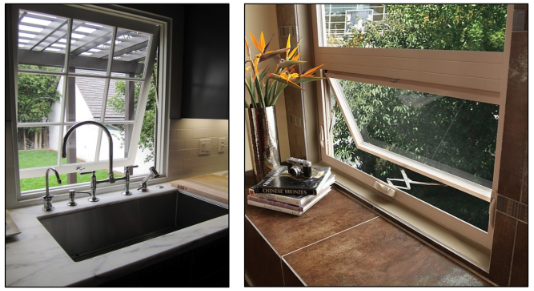
Awning windows are a type of hinged window that opens outward from the bottom using a top-mounted hinge. They are designed to resemble the awnings commonly used for shading outdoor spaces, hence their name.
-
These windows are known for their unique operating style, which allows them to remain open even during light rain, providing ventilation while keeping rainwater out.
Construction:
-
Awning windows are typically constructed with a frame made from materials such as wood, vinyl, aluminum, or fiberglass. The frame material can influence the window’s appearance, energy efficiency, and maintenance requirements.
-
The sash of an awning window is also constructed from the same frame material and contains one or more glass panes. Different types of glass can be chosen to meet specific needs, such as energy efficiency or sound insulation.
Advantages:
Rain Protection:
-
One of the primary advantages of awning windows is their ability to provide ventilation even during light rain. The outward-opening design creates a shield that prevents rain from entering the home while allowing fresh air to flow in.
Privacy and Ventilation:
-
Awning windows can be strategically placed higher on walls to offer both privacy and ventilation. They allow for airflow without compromising security or obstructing outdoor views.
Energy Efficiency:
-
When properly sealed and equipped with energy-efficient glass, awning windows can contribute to energy savings. Their design minimizes air infiltration when closed, making them suitable for energy-conscious homeowners.
Contemporary Appearance:
-
Awning windows have a modern and clean appearance that complements various architectural styles. Their unique design adds a touch of sophistication to a home’s aesthetics.
Considerations:
Opening Mechanism:
-
Awning windows are operated using a crank or lever mechanism. Homeowners should ensure that the opening mechanism is well-maintained to prevent any operational issues, especially since it is located at the top of the window.
Cleaning Accessibility:
-
Cleaning the exterior of awning windows may require access to the exterior side of the glass, which can be challenging for upper-story windows. Proper maintenance is essential for keeping the window’s hardware and seals in good condition.
Limited Opening Height:
-
The opening height of an awning window is limited by the size of the window and the angle at which it opens. While this design allows for rain protection and privacy, it may not provide as wide an opening as other window styles for maximum ventilation.
Architectural Compatibility:
-
Awning windows have a distinct appearance with their top-mounted hinge and outward-opening design. Homeowners should consider the compatibility of this design with their home’s architectural style when choosing awning windows.
In summary, awning windows offer unique advantages, such as rain protection, privacy, energy efficiency, and a contemporary appearance. Their outward-opening design makes them a versatile choice for areas where ventilation is needed even during light rain or where privacy and energy efficiency are priorities. However, homeowners should consider their opening mechanism, cleaning accessibility, opening height, and architectural compatibility when deciding if awning windows are the right fit for their home.
-
-
Picture Windows
-
Definition and Construction:
Picture Window Definition:
-
Picture windows are large, fixed windows designed to provide unobstructed views of the outdoor scenery and maximize natural light within a room. Unlike operable windows, picture windows cannot be opened or closed.
-
Their primary purpose is to frame picturesque views, act as a focal point in a room, and allow ample daylight to enter the living space.
Construction:
-
Picture windows are typically constructed with a frame made from various materials, including wood, vinyl, aluminum, or fiberglass. The choice of frame material can impact the window’s aesthetics, energy efficiency, and maintenance requirements.
-
The expansive glass area of picture windows is often made of insulated glass to enhance energy efficiency, sound insulation, and UV protection. Multiple panes of glass may be used, with inert gas fills to improve insulation properties.
Advantages:
Scenic Views:
-
The primary advantage of picture windows is their ability to showcase stunning outdoor views. They act as a living canvas, framing landscapes, cityscapes, or natural beauty, making them an ideal choice for homes with picturesque surroundings.
Natural Light:
-
Picture windows allow an abundance of natural light to flood the interior spaces, creating a bright and inviting atmosphere. They can reduce the need for artificial lighting during the day, potentially saving on energy costs.
Architectural Elegance:
-
Picture windows contribute to the architectural elegance of a home’s design. They can serve as a focal point, enhancing the aesthetic appeal of a room and adding a sense of grandeur to the interior.
Energy Efficiency:
-
When equipped with insulated glass and energy-efficient frame materials, picture windows can contribute to energy savings by minimizing heat transfer and improving thermal performance.
Considerations:
Ventilation Limitation:
-
Picture windows do not open, so they do not provide ventilation. Homeowners should consider their placement in rooms where ventilation is essential, such as kitchens and bathrooms, and pair them with operable windows or other ventilation solutions.
Cleaning and Maintenance:
-
Cleaning the exterior of picture windows may require access to the exterior side of the glass, especially for large or upper-story windows. Proper maintenance is essential to keep the glass and frame in excellent condition.
Privacy:
-
Due to their fixed nature and expansive glass area, picture windows may compromise privacy in some areas of the home. Homeowners should consider the placement of picture windows in bedrooms or bathrooms and use appropriate window treatments if necessary.
Sealing and Insulation:
-
To ensure optimal energy efficiency, it’s crucial that picture windows are properly sealed and insulated. Any gaps or sealant deterioration can affect their performance, potentially leading to drafts or reduced insulation.
In summary, picture windows are designed to capture breathtaking views, flood rooms with natural light, and add architectural elegance to a home. They excel in showcasing the surrounding landscape and enhancing the overall aesthetic of interior spaces. However, homeowners should be mindful of their limitations in terms of ventilation, privacy, cleaning and maintenance, and energy efficiency to make informed decisions when incorporating picture windows into their home design.
-
Fixed Windows
-
Fixed/Stationary Window Definition:
-
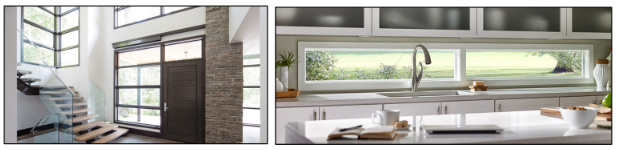
Fixed or stationary windows are non-operable windows that cannot be opened or closed. They are designed to provide unobstructed views, maximize natural light, and enhance the architectural aesthetics of a room.
-
These windows are permanently sealed and do not have any moving parts, making them an ideal choice for areas where ventilation is not a primary concern.
Construction:
-
Fixed windows are constructed with a frame made from various materials, including wood, vinyl, aluminum, or fiberglass. The choice of frame material can impact the window’s appearance, energy efficiency, and maintenance requirements.
-
The glass used in fixed windows is often insulated to improve energy efficiency, sound insulation, and UV protection. Multiple panes of glass may be used, with inert gas fills to enhance insulation properties.
Advantages:
Unobstructed Views:
-
The primary advantage of fixed windows is their ability to offer unobstructed and uninterrupted views of the outdoors. They serve as a framing element for picturesque scenery, architectural details, or garden landscapes.
Natural Light:
-
Fixed windows allow an abundance of natural light to enter the room, creating a bright and inviting atmosphere. They can reduce the need for artificial lighting during the day, potentially saving on energy costs.
Architectural Aesthetics:
-
Fixed windows contribute to the architectural aesthetics of a home’s design. They can act as focal points, enhancing the overall visual appeal of a room and adding a sense of sophistication to the interior.
Energy Efficiency:
-
When equipped with insulated glass and energy-efficient frame materials, fixed windows can contribute to energy savings by minimizing heat transfer and improving thermal performance. They serve as excellent insulators.
Considerations:
Ventilation Limitation:
-
Fixed windows do not provide ventilation as they cannot be opened. Homeowners should carefully select their placement in rooms where ventilation is necessary, such as kitchens and bathrooms, and complement them with operable windows or other ventilation solutions.
Cleaning and Maintenance:
-
Cleaning the exterior of fixed windows may require access to the exterior side of the glass, especially for large or upper-story windows. Proper maintenance is essential to keep the glass and frame in excellent condition.
Privacy:
-
Due to their non-operable nature and expansive glass area, fixed windows may compromise privacy in some areas of the home. Homeowners should consider the placement of fixed windows in bedrooms or bathrooms and use appropriate window treatments if necessary.
Sealing and Insulation:
-
To ensure optimal energy efficiency, it’s crucial that fixed windows are properly sealed and insulated. Any gaps or sealant deterioration can affect their performance, potentially leading to drafts or reduced insulation.
In summary, fixed or stationary windows are designed to capture unobstructed views, maximize natural light, and enhance the architectural aesthetics of a room. They excel in showcasing the surrounding environment and adding elegance to interior spaces. However, homeowners should be mindful of their limitations in terms of ventilation, privacy, cleaning and maintenance, and energy efficiency when incorporating fixed windows into their home design.
-
Roof/Skylight Windows
-
Roof and Skylight Window Definition:
-
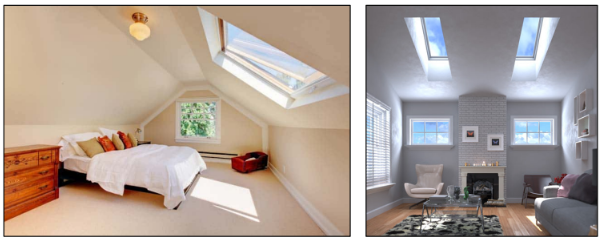
Roof and skylight windows are specially designed windows installed in the roof or ceiling of a building to allow natural light to enter the interior space. These windows are often positioned at an angle or on a pitched roof, providing an upward view of the sky or the exterior surroundings.
Construction:
-
Roof and skylight windows are typically constructed with a frame made from materials such as wood, vinyl, aluminum, or fiberglass. The choice of frame material can impact the window’s appearance, energy efficiency, and maintenance requirements.
-
The glazing used in roof and skylight windows is crucial for their performance. Specialized glazing, often with low-emissivity (Low-E) coatings and insulated glass, helps improve energy efficiency, reduce heat gain or loss, and protect against UV radiation.
-
Skylight windows may come with various opening mechanisms, such as manual or motorized venting, to provide ventilation when needed.
Advantages:
Natural Light Enhancement:
-
Roof and skylight windows are designed to flood interior spaces with abundant natural light. They can brighten areas that may be challenging to illuminate with traditional vertical windows.
Architectural Impact:
-
Roof and skylight windows can have a significant architectural impact, creating a focal point and adding uniqueness to a room. They allow for innovative design solutions and can transform the look and feel of a space.
Energy Efficiency:
-
When equipped with energy-efficient glazing and proper sealing, roof and skylight windows can contribute to energy savings by maximizing daylight while minimizing heat gain or loss. They help reduce the need for artificial lighting during the day.
Ventilation (Skylight Only):
-
Skylight windows with venting options provide additional ventilation and air circulation, making them suitable for rooms like kitchens or bathrooms where ventilation is essential.
Considerations:
Installation Expertise:
-
Installing roof and skylight windows requires specific expertise and precise installation techniques to ensure proper sealing, water tightness, and insulation. Improper installation can lead to leaks or energy inefficiency.
Maintenance and Cleaning:
-
Roof and skylight windows may require regular cleaning, including the exterior surfaces, which can be challenging to access. Maintenance should include inspecting seals and frames for signs of wear or deterioration.
Solar Heat Gain:
-
Depending on the orientation and glazing properties, roof and skylight windows can contribute to solar heat gain. Homeowners should consider shading or blinds to control heat and light levels.
Condensation:
-
Condensation can be a concern with skylight windows, especially in humid climates. Proper ventilation and insulation measures should be in place to minimize this issue.
Privacy (Skylight Only):
-
Skylight windows can compromise privacy, especially if they are installed in bedrooms or bathrooms. Homeowners may need to use window coverings to address privacy concerns.
In summary, roof and skylight windows are designed to bring natural light into interior spaces and enhance architectural aesthetics. They offer advantages such as improved natural lighting, architectural impact, energy efficiency, and, in the case of skylights, ventilation. However, homeowners should consider installation expertise, maintenance, solar heat gain, condensation, and privacy when incorporating roof or skylight windows into their home design. Proper planning and care can maximize the benefits of these unique windows.
-
Bay/Bow Windows
-
Bay Window Definition:
-
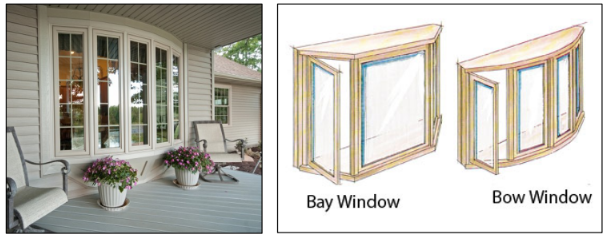
Bay windows are a set of windows that project outward from the main walls of a building, creating a three-dimensional alcove or bay within the interior. They are typically composed of three windows, with a large fixed or picture window in the center and two smaller windows (often casement or double-hung) on the sides that can be operable or fixed.
Bow Window Definition:
-
Bow windows are similar to bay windows in that they project outward, but they consist of four or more equal-sized windows, creating a gentle curve or arc. The individual windows in a bow window are typically fixed and can be designed with either a straight or curved appearance.
Construction:
-
Both bay and bow windows are constructed with frames made from materials such as wood, vinyl, aluminum, or fiberglass. The choice of frame material can affect the window’s appearance, energy efficiency, and maintenance requirements.
-
The glass used in bay and bow windows is typically insulated and may have various glazing options to improve energy efficiency, sound insulation, and UV protection.
Advantages:
Increased Natural Light:
-
Both bay and bow windows allow a significant amount of natural light to enter the room, creating a bright and welcoming atmosphere. The large central window, often a fixed or picture window, serves as a focal point for the room.
Expansive Views:
-
The outward projection of bay and bow windows provides expansive views of the outdoors, allowing homeowners to enjoy picturesque landscapes and the surrounding environment from the comfort of their home.
Architectural Elegance:
-
Bay and bow windows contribute to the architectural elegance of a home’s design. They add a sense of sophistication, create visual interest, and enhance the overall aesthetic appeal of a room.
Versatile Interior Space:
-
The interior space created by bay and bow windows can be utilized in various ways, such as a cozy reading nook, additional seating area, or a space for indoor plants and decor.
Considerations:
Space Requirements:
-
Both bay and bow windows require sufficient exterior space for their projection. Homeowners should consider the available outdoor space and the location of obstructions like trees, bushes, or neighboring structures.
Ventilation and Privacy:
-
Depending on the design, bay and bow windows may have operable or fixed side windows. Homeowners should consider the need for ventilation and privacy when selecting window styles and treatments.
Maintenance:
-
Cleaning the exterior of bay and bow windows, especially for upper-story windows, can be challenging due to their projection. Regular maintenance is essential to keep the glass and frames in good condition.
Energy Efficiency:
-
Proper sealing and insulation are crucial to ensure that bay and bow windows are energy-efficient. Homeowners should consider the glazing and frame materials to minimize heat transfer.
Architectural Compatibility:
-
Bay and bow windows have a distinct appearance with their outward projection and multiple window units. Homeowners should consider the compatibility of this design with their home’s architectural style when choosing these window types.
In summary, bay and bow windows are designed to bring in abundant natural light, offer expansive views, enhance architectural aesthetics, and provide versatile interior spaces. They can transform the look and feel of a room while contributing to the overall appeal of a home. However, homeowners should consider space requirements, ventilation, privacy, maintenance, energy efficiency, and architectural compatibility when incorporating bay or bow windows into their home design.
-
Sliding Windows
-
Sliding Window Definition:
-
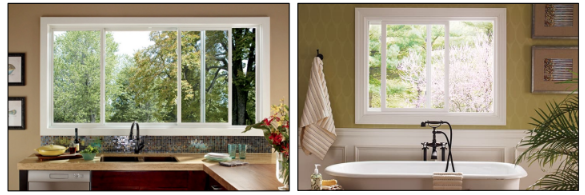
Sliding windows, also known as slider windows, are horizontal windows with sashes that slide horizontally within the window frame. They operate on tracks, allowing one sash to slide over the other to open or close the window. They are popular for their simple and space-saving design.
Construction:
-
Sliding windows are constructed with a frame made from materials such as wood, vinyl, aluminum, or fiberglass. The choice of frame material can impact the window’s appearance, energy efficiency, and maintenance requirements.
-
The sashes of sliding windows are typically fitted with one or more glass panes, which can vary in thickness and type depending on the desired level of insulation, soundproofing, and UV protection.
Advantages:
Ease of Operation:
-
One of the primary advantages of sliding windows is their ease of operation. They glide smoothly on tracks, requiring minimal effort to open or close. This makes them ideal for locations where accessibility or ease of use is essential.
Space Efficiency:
-
Sliding windows are space-efficient because they do not have sashes that swing open or protrude into the room. They are well-suited for areas with limited space or where the window is near walkways, patios, or landscaping.
Contemporary Aesthetics:
-
Sliding windows have a modern and clean appearance that complements various architectural styles. They offer a streamlined, unobtrusive look that can enhance a room’s aesthetics.
Ventilation:
-
Sliding windows can provide excellent ventilation when one sash is partially or fully opened. Homeowners can control the amount of airflow by adjusting the position of the sliding sashes.
Considerations:
Cleaning Accessibility:
-
Cleaning the exterior of sliding windows may require access to the exterior side of the glass, especially for upper-story windows. Homeowners should consider their ability to clean the windows effectively when choosing this style.
Ventilation Limitation:
-
Sliding windows have a limited opening size, which may not provide as much ventilation as other window styles. This can be a consideration for rooms where maximum airflow is desired.
Sealing and Insulation:
-
Proper sealing and insulation are crucial to ensure that sliding windows are energy-efficient. Homeowners should consider the glazing and frame materials to minimize heat transfer.
Security:
-
Sliding windows may have security concerns, especially if they are located on the ground floor or in easily accessible areas. Homeowners should invest in secure locking mechanisms and consider additional security measures.
Track Maintenance:
-
The tracks on which sliding windows operate require regular maintenance to ensure smooth operation. Dust, debris, or misalignment can affect their performance, so homeowners should keep them clean and well-maintained.
In summary, sliding windows are known for their ease of operation, space efficiency, contemporary aesthetics, and ventilation capabilities. They are suitable for locations with limited space and offer a clean and modern look. However, homeowners should consider cleaning accessibility, ventilation limitations, sealing and insulation, security, and track maintenance when choosing sliding windows for their home. Proper maintenance and selection of features can maximize the benefits of this window style.
-