
Knob-and-Tube Wiring
Knob-and-Tube Wiring
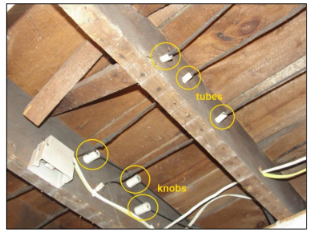
Knob-and-tube wiring, a relic of early electrical systems, was widely used in homes constructed from the late 1800s through the 1940s. Understanding its characteristics and historical context is crucial for real estate brokers:
-
Wiring Structure: Knob-and-tube wiring consists of two separate wires – a hot wire (usually black) and a neutral wire (usually white) – supported by porcelain knobs and tubes. These knobs and tubes serve to secure and insulate the wires, keeping them apart from each other and from the building structure.
-
Historical Significance: Knob-and-tube wiring marked a significant advancement from the use of gaslights in homes. It allowed for the safe and relatively efficient distribution of electricity, revolutionizing the way people lived.
Common Issues:
Knob-and-tube wiring poses several inherent issues that brokers must be aware of, as these issues can impact the safety and functionality of a home:
1. Overheating: Over time, the insulation around the wires can deteriorate or become damaged. This exposes the wires and can lead to overheating, potentially causing fires. Brokers should be cautious when inspecting homes with knob-and-tube wiring, as signs of overheating can include:
-
Discoloration or scorch marks on nearby materials, such as wood framing or insulation.
-
A burning smell, which may indicate ongoing overheating.
-
Flickering lights or frequently blown fuses, indicating electrical problems.
2. Lack of Grounding: Knob-and-tube systems do not include a ground wire, which is a vital safety feature in modern wiring. This absence increases the risk of electrical shock and limits the use of three-pronged outlets. Brokers should advise clients about the limitations of grounding in homes with knob-and-tube wiring and the potential need for electrical upgrades to improve safety.
3. Aging and Deterioration: Due to its age, knob-and-tube wiring is prone to degradation. Brittle insulation, exposed wires, and compromised connections are common problems. Brokers should inspect the wiring carefully for signs of deterioration, such as:
-
Cracked or crumbling insulation, which exposes wires.
-
Loose or disconnected wires at junction points.
-
Damaged or missing porcelain knobs and tubes.
-
Evidence of previous repairs or modifications that may not meet current safety standards.
Identifying Knob-and-Tube Wiring
Recognizing knob-and-tube wiring is essential for brokers during property inspections. Here’s how to identify it:
-
Visual Inspection: Begin by examining the visible wiring in the basement, attic, or crawl spaces, as these are typical locations for knob-and-tube systems. Knob-and-tube wiring will consist of exposed wires suspended from porcelain knobs and threaded through porcelain tubes. Look for the following characteristics:
-
Exposed Wires: Knob-and-tube wiring is characterized by exposed wires, often held apart by porcelain knobs at intervals and passing through porcelain tubes where they go through structural elements. These elements are usually white or cream-colored.
-
Lack of Conduit: Unlike modern wiring, knob-and-tube wiring does not use conduit to encase the wires. The wires are typically strung along framing members and pass through holes in wooden studs or joists without any protective sheathing.
-
-
Distribution of Knobs and Tubes: Knobs and tubes should be spaced about 1.5 to 2 feet apart along the length of the wires. They may run horizontally along joists, rafters, or other structural components. Additionally, knob-and-tube wiring often avoids running through insulation materials, which can help identify it in attics or wall cavities.
-
Labeling: In some cases, the wiring may have been labeled to indicate its type. Look for any labels or markings on the wires or in the electrical boxes that mention “knob-and-tube.” However, reliance on labels alone may not be sufficient, as labels can fade or be absent.
-
Age of the Property: Homes built during the specified era (late 1800s to 1940s) are more likely to have knob-and-tube wiring. However, this should not be the sole indicator, as renovations or rewiring may have occurred over the years.
Importance of Replacement
Brokers should emphasize the critical importance of replacing knob-and-tube wiring to prospective buyers by addressing various facets, including safety hazards, insurance implications, inadequacy for modern needs, and its impact on property resale:
-
Safety Hazards and Fire Risks:
-
Deteriorating Insulation: Knob-and-tube wiring is notorious for aging insulation that becomes brittle and crumbly over time. This poses a severe fire risk as exposed wires can come into contact with flammable materials within walls, attics, or crawl spaces.
-
Real-World Example: In 2019, a homeowner in California discovered the dangers of deteriorating insulation in their knob-and-tube wiring when an electrical fire broke out. The aging insulation had crumbled, exposing bare wires that came into contact with nearby insulation materials, ultimately igniting a house fire. Fortunately, the occupants escaped unharmed, but the property suffered extensive damage.
Overheating: Due to the lack of modern insulation, knob-and-tube wiring is more susceptible to overheating. The wires may become overloaded, increasing the risk of electrical fires.
-
Real-World Example: A historic home in Massachusetts faced a potentially devastating situation when the outdated knob-and-tube wiring system began overheating due to the strain of modern electrical demands. The wires, lacking the insulation found in contemporary wiring, became hot to the touch. Prompt intervention by an electrician prevented a fire, highlighting the importance of addressing overheating risks associated with these old systems.
Fire and Death: Electrical fires resulting from knob-and-tube wiring can have catastrophic consequences, including property damage, injuries, and loss of life.
-
Real-World Example: In 2017, a tragic incident in Pennsylvania claimed the lives of three family members when an electrical fire caused by knob-and-tube wiring engulfed their residence. The outdated system’s exposed wires and deteriorated insulation were identified as contributing factors to the deadly fire. This heart-wrenching incident underscores the potential consequences of neglecting the dangers associated with outdated electrical systems. It serves as a stark reminder of the importance of addressing these issues promptly and proactively to prevent such tragedies.
-
-
-
Insurance Implications:
-
Difficulty Obtaining Insurance: Brokers should inform buyers that many insurance companies perceive knob-and-tube wiring as a high-risk feature. This perception can lead to challenges in securing homeowners’ insurance.
-
Higher Premiums: Even if insurance can be obtained, homeowners with knob-and-tube wiring may face substantially higher insurance premiums. Brokers should provide potential buyers with estimates of these increased costs to help them make informed decisions.
-
-
Inadequacy for Modern Needs:
-
Electrical Demands: Modern households rely on a multitude of electrical appliances and devices, which can overwhelm knob-and-tube systems designed for an earlier era. Brokers should emphasize that upgrading to contemporary wiring is crucial for meeting current electrical demands, ensuring convenience, and avoiding power disruptions.
-
-
Resale Value:
-
Market Perception: Properties with knob-and-tube wiring typically have lower resale values compared to homes with updated electrical systems. Brokers should stress that upgrading the wiring can potentially increase the property’s market appeal and resale value.
-