
Outdoor Kitchens and Grilling Stations
Hardware Essentials
-
Outdoor kitchens hinge on the hardware that equips them for culinary adventures. Here are the core components:
-
Grill Selection: The heart of any outdoor kitchen is undoubtedly the grill. It’s where flavors are forged and culinary magic happens. Understanding the nuances of grill selection is crucial for homeowners venturing into outdoor cooking. Here’s a closer look at the three primary grill types:
-
Gas Grills: Gas grills are synonymous with convenience. They ignite instantly and offer precise temperature control, making them ideal for weeknight dinners and quick grilling sessions. Homeowners can easily regulate heat zones, ensuring the perfect sear or slow-roast. Gas grills typically run on propane or natural gas, and the choice often comes down to existing infrastructure and personal preference.
-
Charcoal Grills: For those who crave that unmistakable smoky flavor and appreciate the art of grilling, charcoal grills are the go-to choice. These grills require a bit more patience and skill but reward with authentic, mouthwatering results. The type of charcoal used, be it briquettes or lump charcoal, can further refine the grilling experience.
-
Pellet Grills: Pellet grills bridge the gap between gas and charcoal. They provide the convenience of gas grills with the flavor infusion of charcoal. Pellet grills use wood pellets as fuel, and an automated auger system regulates temperature. Homeowners can select different wood pellet flavors to impart specific smoky notes to their dishes. This versatility is a key selling point.
Brands and Features: Navigating the crowded grill market can be overwhelming. The choice of brand and the features offered can significantly impact the outdoor cooking experience. Here’s a glimpse into the world of grill brands:
-
Weber: Weber is a household name in the grilling world, known for its quality and reliability. Their grills often come with innovative features like the Flavorizer bars, which catch drippings and create smoky vapor, enhancing flavor.
-
Traeger: Traeger pioneered pellet grilling, and their grills are celebrated for their ease of use and versatility. They offer a wide range of sizes and models, allowing homeowners to find the perfect fit.
-
Big Green Egg: Ceramic kamado-style grills like the Big Green Egg are renowned for their temperature retention and ability to handle various cooking styles, from low and slow smoking to high-heat searing.
-
-
Grill Sizes
-
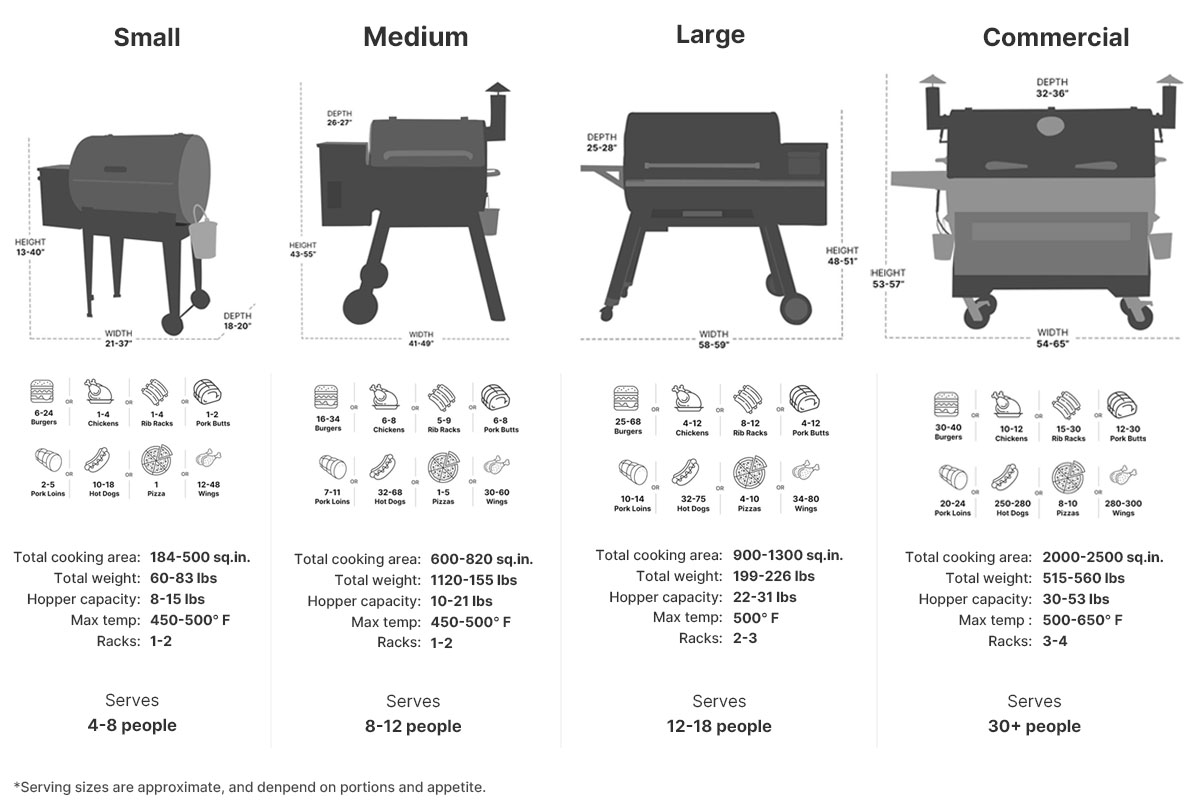
When it comes to selecting the right grill size, it’s crucial to match it with the homeowner’s specific cooking needs. Let’s delve into the details of grill sizes and how they can be applied:
-
Compact Grills (Small): Compact grills are like a cozy kitchen countertop. They’re typically designed for cooking for up to 4-6 people, making them perfect for small families or couples who enjoy casual outdoor cooking. These grills offer a cooking area similar to a large pizza, about 12 to 16 inches in diameter. For example, a 2-burner propane gas grill with a cooking area of 300 square inches is akin to having enough space to cook a few burgers and hotdogs at a time, perfect for everyday use.
-
Medium-Sized Grills: Medium-sized grills are like the versatile dining table in your backyard. They strike a balance between cooking capacity and versatility, offering a cooking area comparable to a standard kitchen oven. With around 400 to 600 square inches of cooking space, they can comfortably cater to gatherings of 6-10 people, making them suitable for families that occasionally entertain guests. For instance, a medium-sized charcoal grill with 550 square inches of cooking area is akin to having a large family dinner table where you can grill various dishes during your outdoor adventures.
-
Large Grills: Large grills are like the spacious picnic area in your favorite park. They’re designed for homeowners who frequently host larger gatherings, parties, or events. These grills boast cooking areas of 600 square inches and above, often reaching 1,000 square inches or more. Large grills can accommodate multiple grilling zones, making it possible to cook various items simultaneously. For example, a 4-burner natural gas grill with 800 square inches of cooking space is akin to having a generous picnic area where you can grill a feast for a big group.
-
Fuel Differences
-
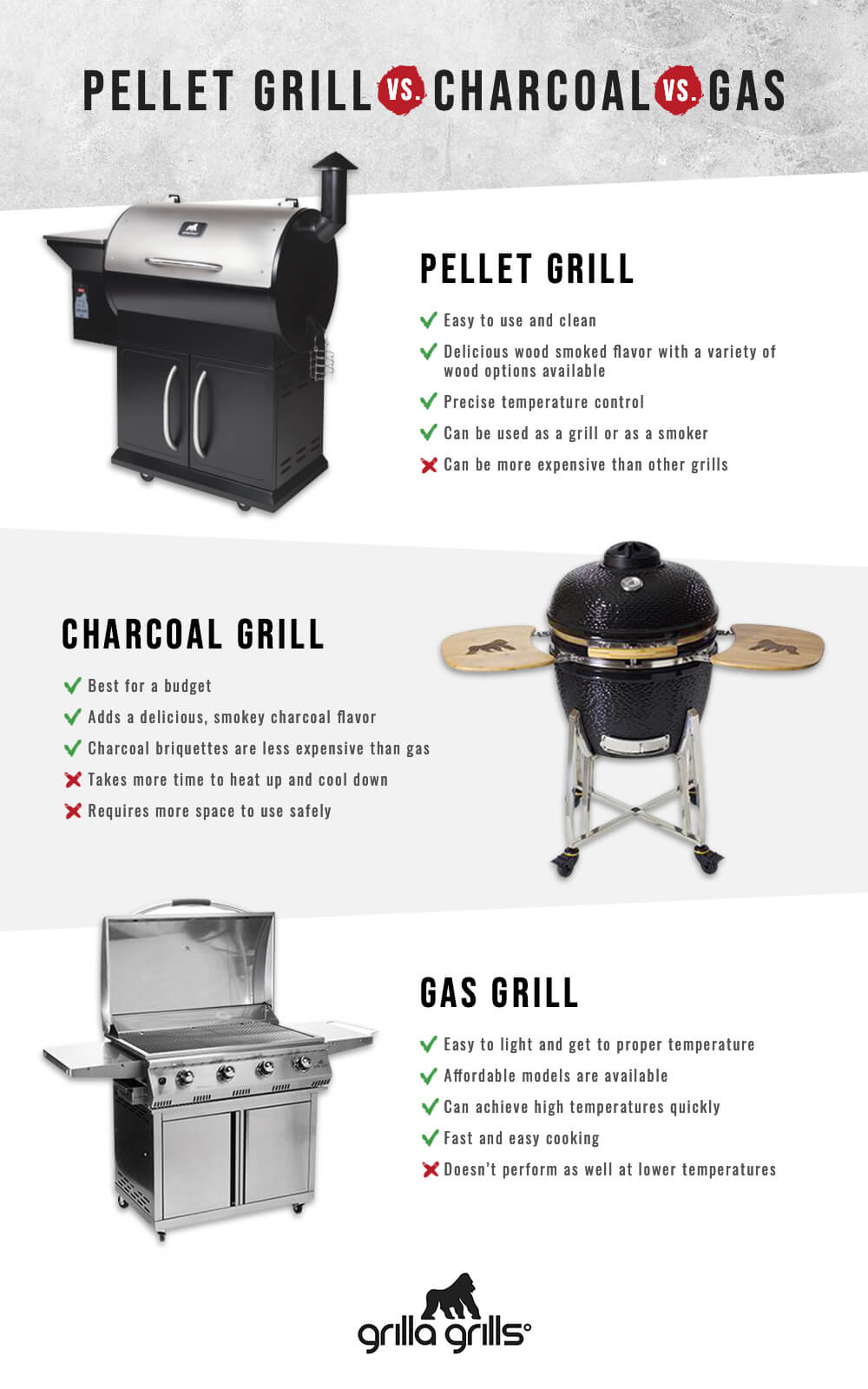
The choice of fuel source significantly influences the cooking experience, so let’s get specific about the characteristics of each and how they can be applied:
-
Gas Grills: Gas grills are like the efficient stovetop in your kitchen. They’re known for their convenience and quick ignition, making them perfect for busy homeowners who want to prepare weeknight dinners efficiently. A standard propane gas grill with electronic ignition and multiple burners allows precise temperature control and is ideal for searing steaks or grilling vegetables.
-
Charcoal Grills: Charcoal grills are for the passionate grill masters who appreciate the smoky, authentic flavor of charcoal-grilled food. They require more time to light and reach the desired temperature, making them best suited for leisurely weekend grilling. A classic kettle-style charcoal grill offers a direct grilling experience with that signature smokiness, akin to using a traditional wood-burning stove.
-
Pellet Grills: Pellet grills are like the modern convection ovens of the grilling world. They offer the convenience of gas grills while infusing the flavor of charcoal. They use wood pellets as fuel and feature automated temperature control, similar to setting your oven’s temperature. For instance, a pellet grill from a brand like Traeger can be set to the desired temperature, and it will automatically maintain it throughout the cooking process. This is ideal for homeowners who want both convenience and flavor control in their outdoor cooking, much like using a modern convection oven for precise baking.
-
Practical Applications
Cooking Styles: Homeowners have various cooking styles and preferences. Some may prefer quick, weeknight grilling for simple and delicious meals, while others relish the art of slow smoking, which demands patience and precision. It’s important to align the outdoor kitchen with these cooking styles to ensure it provides the required hardware and functionality.
For example, if a homeowner enjoys the convenience of grilling during busy weekdays, a gas grill with multiple burners and precise temperature control would be an essential feature. On the other hand, someone who loves the slow and smoky flavor of barbecue might prioritize a pellet grill with smoking capabilities, offering the versatility to experiment with different wood flavors for their meats.
Brands and Features: The outdoor cooking market is diverse, with a wide range of grill brands and accessory features to choose from. Grills can vary significantly in terms of quality, performance, and added functionalities. Homeowners should be aware of the options available to tailor their outdoor kitchen to their culinary aspirations.
For instance, some grills come with built-in smokers, allowing homeowners to combine the flavors of grilling and smoking within a single appliance. Others feature side burners, which can be handy for preparing sauces or side dishes while grilling. Infrared sear zones provide high-intensity heat for perfect searing, enhancing the versatility of the outdoor kitchen.
Incorporating outdoor kitchens and grilling stations into an outdoor living space provides a seamless transition from indoor to outdoor cooking and dining. These features cater to both culinary enthusiasts and those who simply enjoy the convenience and ambiance of al fresco dining. By understanding the diverse options and considerations, homeowners can make informed choices that align with their lifestyle and preferences.