
Gable Roof
Gable Roof
Gable Roof
-
Identification:
-
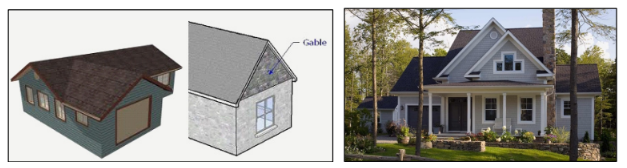
Shape and Structure: Gable roofs are easily identified by their triangular shape. They consist of two sloping roof surfaces that meet at a central ridge, forming a gable or triangle at each end of the house. This triangular structure is a distinctive feature of gable roofs.
Why It’s Built That Way:
-
Effective Drainage: Gable roofs are intentionally designed with steep slopes on both sides to ensure efficient drainage of rainwater and snow. The steep pitch allows precipitation to quickly run off the roof, reducing the risk of water pooling or leakage.
-
Ventilation: Gable roofs often incorporate vents or windows in the gable ends. This design promotes natural ventilation within the attic space. As warm air rises, it escapes through these vents, drawing in cooler air from the eaves. This process helps regulate indoor temperatures and prevents moisture buildup, contributing to energy efficiency.
Why It’s Used There:
-
Common in Residential Construction: Gable roofs are a popular choice in residential construction, especially for single-family homes. Their simple and functional design makes them suitable for a wide range of architectural styles and house sizes.
-
Aesthetics: Gable roofs offer a classic and timeless appearance, making them a preferred choice for homeowners seeking a traditional look. They can enhance the overall aesthetics of a house and are often associated with architectural styles like Colonial, Cape Cod, and Ranch.
Advantages:
-
Efficient Drainage: The steep slopes of gable roofs ensure rapid drainage of rainwater and snow, reducing the likelihood of water-related issues such as leaks or water damage.
-
Natural Ventilation: Gable roofs promote natural attic ventilation through the inclusion of gable-end vents or windows. This ventilation helps control indoor temperatures, prevents moisture accumulation, and can reduce the need for mechanical ventilation systems.
-
Versatility: Gable roofs are versatile and adaptable to various architectural styles. They can be customized to suit the aesthetic preferences of homeowners.
-
Cost-Effective: Their relatively simple design and construction make gable roofs cost-effective, both in terms of materials and labor.
Drawbacks:
-
Wind Vulnerability: Gable roofs, especially those with steep pitches, can be susceptible to wind damage in regions prone to strong winds or hurricanes. The broad gable ends can create uplift forces, potentially leading to roof damage.
-
Maintenance: Gable roofs may require periodic maintenance, including repainting of gable ends and upkeep of vents or windows to ensure proper functionality.
-
Limited Attic Space: While gable roofs provide attic space, it may be limited compared to other roof types like hip roofs or mansard roofs. This can impact the available storage or living space in the attic.
-