
Soffit Vents
Soffit Vents
Soffit Vents:
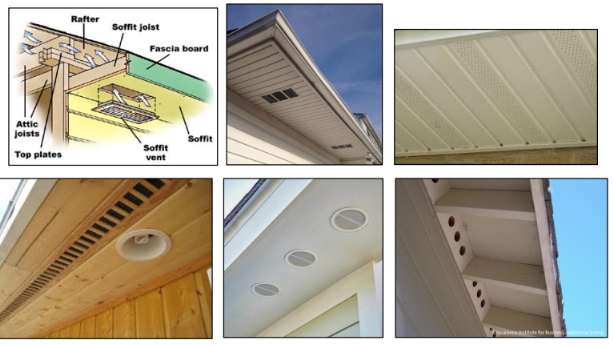
-
How Soffit Vents Work:
-
Location: Soffit vents are typically installed in the eaves or the underside of the roof’s overhang. They are positioned along the soffit or eave area, allowing air to enter the attic from outside.
-
Airflow: Soffit vents are intake vents, meaning their primary function is to introduce fresh, cool air into the attic space. As external air enters through the soffit vents, it displaces the warmer, moist air that rises to the attic’s upper portions.
-
Balanced Ventilation: Soffit vents work in conjunction with exhaust vents, such as ridge vents or turbines, to create a balanced ventilation system. The cool, outdoor air enters through the soffit vents, while the warm, moist air exits through the exhaust vents. This balanced airflow helps regulate attic temperature and moisture levels.
Advantages of Soffit Vents:
-
Balanced Airflow: When used in conjunction with exhaust vents, soffit vents contribute to a balanced and effective attic ventilation system. This prevents heat and moisture buildup within the attic space.
-
Fresh Air Intake: Soffit vents provide a source of fresh, outdoor air, which is essential for maintaining good indoor air quality within the attic. This fresh air can help reduce the risk of mold and mildew growth.
Drawbacks of Soffit Vents:
-
Insufficient on Their Own: Soffit vents alone may not provide adequate attic ventilation. To achieve optimal results, they should be used alongside exhaust vents (such as ridge vents or turbines) to ensure proper air circulation.
-