Ridge Vents
Ridge Vents
How Ridge Vents Work:
-
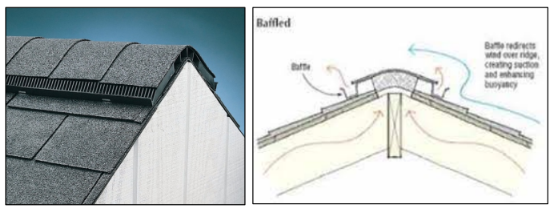
Location: Ridge vents are strategically installed along the highest point or ridge of the roof. They consist of a continuous opening or vent strip that runs the length of the ridge.
-
Natural Convection: Ridge vents rely on the principles of natural convection. As warm, moist air naturally rises within the attic due to temperature differences, it exits through the ridge vent, creating a continuous flow of air from the lower parts of the attic to the upper sections and then out through the ridge.
-
Effective Ventilation: Ridge vents are designed to allow hot and moist air to escape, helping to regulate the attic’s temperature and humidity levels. This prevents the accumulation of heat and moisture that can cause various roofing issues.
Advantages of Ridge Vents:
-
Even Ventilation: Ridge vents offer consistent and even ventilation along the entire roofline. This uniform airflow helps maintain stable attic conditions and prevents hotspots or moisture buildup in different areas of the attic.
-
Aesthetic Appeal: Ridge vents are aesthetically pleasing as they blend seamlessly into the roofline. Unlike some other roof vents, they do not disrupt the overall appearance of the roof, which can be appealing to homeowners concerned about curb appeal.
-
Low Maintenance: Once installed, ridge vents typically require minimal maintenance. They are passive ventilation systems, meaning they operate without the need for electricity or moving parts. This simplicity reduces the chances of malfunctions or breakdowns.
Drawbacks of Ridge Vents:
-
Complex Roof Designs: Ridge vents may not be suitable for roofs with complex designs, such as those featuring multiple intersecting rooflines or dormers. In such cases, alternative ventilation methods may be necessary to ensure proper attic ventilation.
-
Additional Ventilation Needs: In some instances, a roof may require more ventilation than ridge vents alone can provide. Homes with large attics, significant heat gain, or specific architectural features may benefit from supplemental or alternative venting solutions.