
Roof Turbine Vents
Roof Turbine Vents
Roof Turbine Vents:
-
How Roof Turbine Vents Work:
-
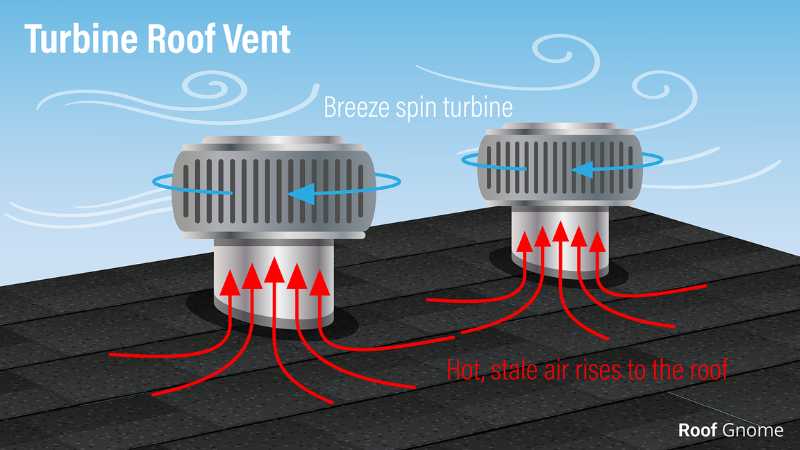
Wind-Driven Ventilation: Roof turbine vents are designed to harness the power of the wind to facilitate attic ventilation. They consist of a turbine-like device installed on the roof’s surface. When the wind blows over the vent, it causes the device to spin, creating airflow within the attic space.
-
Creating a Vacuum Effect: As the turbine spins, it creates a vacuum effect inside the attic. This effect draws warm air, moisture, and odors out of the attic and expels them to the exterior. It is a passive ventilation method that does not require electricity to operate.
Advantages of Roof Turbine Vents:
-
Effective in Windy Conditions: Turbine vents are particularly effective at removing hot air and moisture from the attic when there is a consistent breeze. They can provide robust ventilation on windy days.
-
Energy-Efficient: Since they rely on wind power, turbine vents are energy-efficient and do not add to the homeowner’s electricity consumption.
Drawbacks of Roof Turbine Vents:
-
Inconsistent Ventilation: Turbine vents may not provide consistent ventilation on calm or windless days. Their effectiveness is directly linked to the presence and strength of the wind. In areas with inconsistent wind patterns, they may not perform optimally.
-
Noise: In high winds, turbine vents can generate noise as they spin rapidly. This noise can be noticeable and may be a drawback for homeowners sensitive to sound.
-