Static Attic Vents
Static Attic Vents
Static Attic Vents:
-
How Static Attic Vents Work:
-
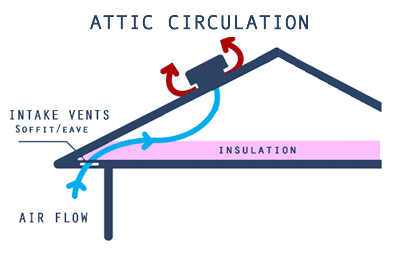
Passive Ventilation: Static attic vents, also known as roof louvers or vents, operate based on passive ventilation principles. They are fixed openings or structures installed on the roof to allow hot air to naturally escape from the attic by convection.
-
Convection Process: As the air inside the attic heats up, it becomes less dense and rises. This warm air naturally moves towards the static vents, where it exits the attic and is replaced by cooler air entering through other intake vents, such as soffit vents.
Advantages of Static Attic Vents:
-
Cost-Effective: Static attic vents are a cost-effective solution for attic ventilation. They have no moving parts and do not require electricity, making them a low-maintenance option.
-
Passive Operation: Since they rely on passive convection currents, static vents can function without the need for mechanical components, making them reliable.
Drawbacks of Static Attic Vents:
-
Limited Effectiveness: The effectiveness of static attic vents may be limited, especially in areas with minimal wind or when there is insufficient temperature differential to drive convection currents. They may not provide as rapid cooling as active ventilation methods.
-
Dependence on Natural Factors: Static attic vents depend on natural factors such as wind and temperature differentials to function optimally. In areas with inconsistent wind patterns, their effectiveness may be compromised.
-