
Gutters and Downspouts: An Integrated Drainage Solution
Gutters and Downspouts

Gutters and downspouts work together as a cohesive system to protect a building’s structural integrity by efficiently managing rainwater runoff from the roof. This comprehensive guide explores their integrated function, types, installation considerations, and maintenance practices, highlighting their critical role in safeguarding properties from water damage.
Integrated Function
Core Purpose: Gutters collect rainwater from the roof’s edge and channel it into downspouts, which then direct the water away from the building’s foundation and exterior walls. This collaboration prevents soil erosion, protects landscaping, and reduces the risk of basement flooding and foundational issues.
Seamless Operation: The efficiency of this system lies in its seamless operation. Gutters capture and convey water to strategically placed downspouts that ensure the water is discharged at a safe distance from the property, thus maintaining the structural and aesthetic integrity of the building.
Types and Materials
-
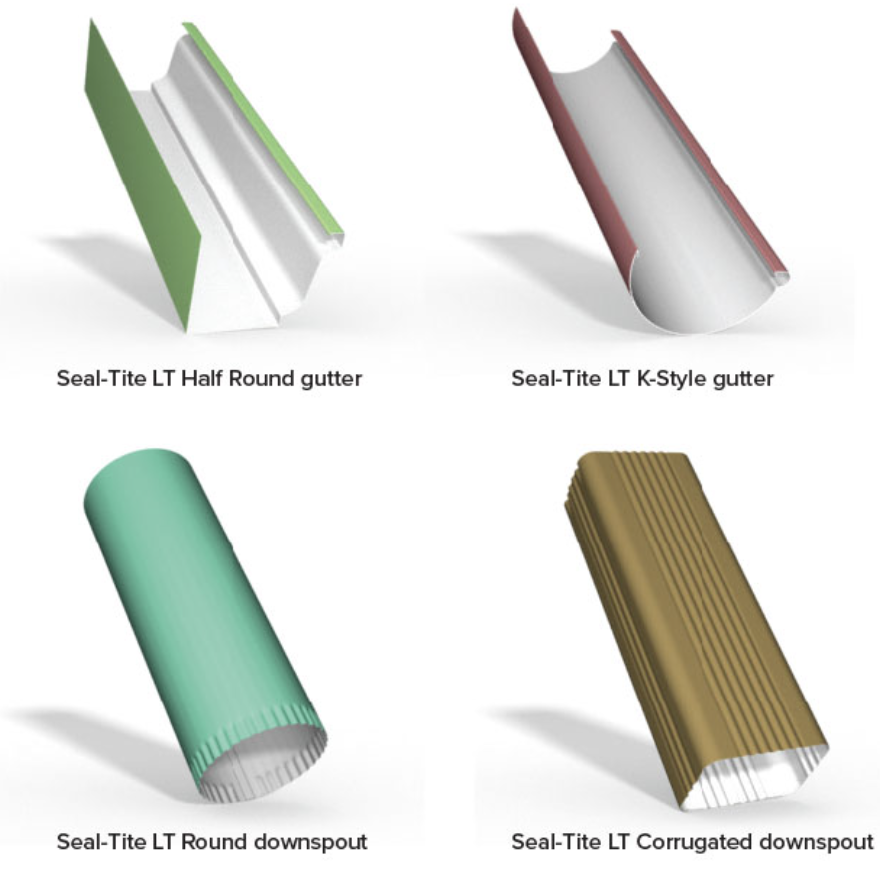
K-Style Gutters and Downspouts: Known for their decorative appearance resembling crown molding, K-style gutters are paired with corresponding downspouts to enhance modern and traditional architectures while providing excellent water flow capacity.
-
Half-Round Gutters and Downspouts: Offering a classic look, half-round gutters and their matching downspouts are often chosen for their efficiency in quickly channeling water away, making them ideal for areas with heavy rainfall.
-
Seamless Gutters: Custom-fabricated on-site to the building’s specifications, seamless gutters reduce leaks due to fewer joints. When combined with downspouts, they offer a sleek, uniform look that minimizes maintenance needs.
-
Installation Considerations
Proper Slope and Alignment: Ensuring that gutters have the correct slope (about 1/4 inch for every 10 feet of gutter) towards downspouts is vital for water flow. The downspouts should be strategically placed to handle the water volume effectively, directing it away from the property.
Capacity and Sizing: The size of the gutters and downspouts should be determined based on the roof’s surface area and the average rainfall intensity in the area to ensure that the system can handle peak flow rates without overflowing.
Gutter Guards: Implementing gutter guards can significantly reduce maintenance by preventing debris from clogging the gutters and downspouts, ensuring an unobstructed flow of water.
Maintenance Practices
Routine Cleaning: To prevent clogs and ensure efficient water flow, gutters and downspouts should be cleaned at least twice a year, especially in the spring and fall, to remove leaves, twigs, and other debris.
Regular Inspections: Inspecting the gutter and downspout system for signs of damage, such as rust, holes, or separations, allows for timely repairs. It’s also important to check that downspouts discharge water sufficiently away from the foundation.
Downspout Extensions: To further protect the foundation, downspout extensions can be used to direct water even further away from the building. These extensions are especially useful in areas prone to heavy rains or where the landscape slopes toward the building.