
Hip Roof
Hip Roof
-
Hip Roof
-
Identification:
-
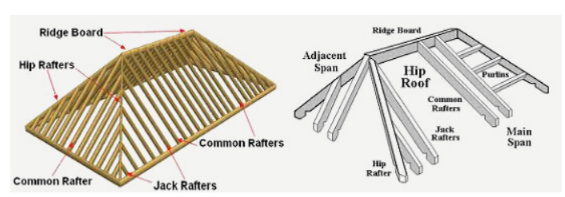
Sloping Sides: Hip roofs are characterized by their distinctive sloping sides. Unlike gable roofs with two slopes meeting at a ridge, hip roofs have all sides sloping downward toward the walls, forming a gentle pyramid shape or trapezoid when viewed from above. Each of the four sides is a hip.
Why It’s Built That Way:
-
Stability: Hip roofs are designed for stability and durability. The multiple slopes on all sides distribute the weight of the roof evenly, making them more resistant to wind uplift and structural stress.
-
Rainwater Drainage: The sloping sides of hip roofs allow rainwater and snow to easily run off from all directions, preventing water accumulation and potential leaks.
-
Aesthetics: Hip roofs provide a clean and symmetrical appearance, which can enhance the overall aesthetic appeal of a house. They are often associated with architectural styles like Colonial and Georgian.
Why It’s Used There:
-
Wind Resistance: Hip roofs are commonly used in regions prone to high winds or hurricanes due to their superior wind resistance. The even distribution of pressure on all sides makes them less susceptible to wind uplift.
-
Aesthetics: Many homeowners appreciate the balanced and timeless look of hip roofs. They are a popular choice for houses with a traditional or classic architectural style.
-
Space Efficiency: Hip roofs offer additional attic or storage space compared to gable roofs. The space beneath the sloping sides can be used for various purposes, including living areas or storage.
Advantages:
-
Stability: Hip roofs are highly stable and durable, making them suitable for areas with extreme weather conditions.
-
Excellent Drainage: Rainwater and snow are efficiently drained from all sides, reducing the risk of leaks or water damage.
-
Aesthetically Pleasing: Hip roofs provide a symmetrical and pleasing appearance that complements various architectural styles.
-
Space Utilization: The attic or space beneath the sloping sides can be utilized effectively for storage or living space.
Drawbacks:
-
Complex Construction: Hip roofs are more complex to design and construct compared to gable roofs, which can result in higher labor and material costs.
-
Limited Roofing Space: While they offer additional attic or storage space compared to gable roofs, hip roofs may still have less usable space than other roof styles like mansard roofs.
-
Maintenance Challenges: Accessing and maintaining the roof, especially the top portion, may be more challenging due to the sloping sides. This can make repairs or maintenance tasks more labor-intensive.
-
-